

Valentine’s Day accounts for at least a quarter of all cut flower sales in the United States—and more than half of all rose sales.
So if you find yourself caring for a bouquet this week (lucky you!), a few simple steps can make the difference between flowers that fade by next weekend… and flowers that stay fresh for weeks.
Like most plant care, it helps to understand the “why” behind the problem. Cut flower freshness relies on two key things:
- Strong water uptake through the stems
- Cool air and stable temperatures
Flowers wilt quickly when one (or both) of those things is missing.
The #1 Thing That Shortens Vase Life: Bacteria
The biggest culprit behind early wilting is bacteria multiplying in the vase water.
As bacteria grows, it forms a slimy film that clogs the bottom of the stems—essentially blocking water uptake. Once stems can’t move water, flowers begin to wilt, and that process becomes difficult (and often impossible) to reverse.
Most great bouquet care comes down to one simple goal:
Keep bacteria out of the water.
Step One: Start With a Truly Clean Vase
The most important step happens before the flowers ever touch water.
Even vases that look clean can harbor bacteria that shortens flower life. Wash your vase with hot water and dish soap, making sure to scrub the inside well. If it’s dishwasher-safe, running it through the dishwasher is even better.
Step Two: Recut Every Stem (Yes, Every Time!)
Once your vase is ready, recut every stem, even if:
- the bouquet looks fresh
- the bouquet came pre-arranged
- the flowers arrived in water
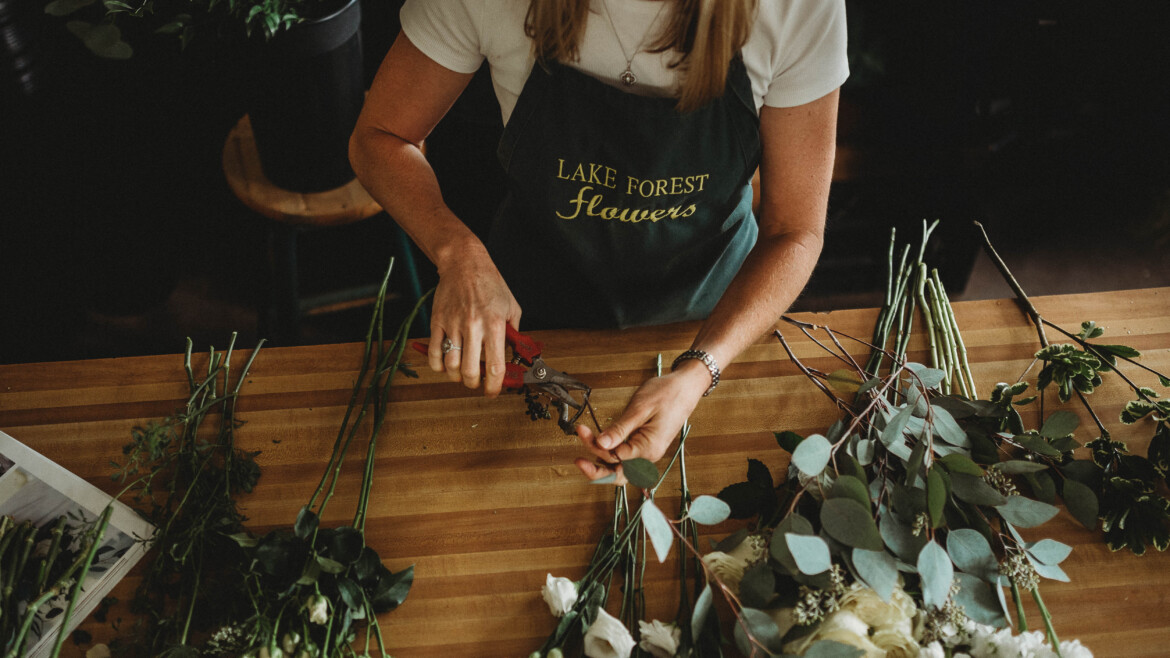
Trim just above the original cut. If any stems feel mushy, cut higher—until the stem feels firm.
Use sharp scissors or pruners and make an angled cut. This increases the surface area and improves water uptake.
Step Three: Remove Any Leaves Below the Water Line
Any leaves sitting in vase water will start to rot, and rotting leaves are basically a bacteria factory.
Remove all foliage that would fall below the water line by pinching it off or trimming with scissors.
Flower Food: Helpful, But Not Required
At Lake Forest Flowers, we process all of our fresh materials with professional flower food to help maximize vase life.
Flower food is helpful because it provides three important things at once:
- Sugar (energy for the blooms)
- Acid (improves water flow through the stems)
- A biocide (slows bacterial growth)
If you use flower food, follow the package directions to ensure the correct dose.
That said…
Fresh water changed every day or two does more to extend vase life than additives in old water.
Skip the Myths: What Doesn’t Work
There are a lot of “home hacks” floating around online, but many of them don’t reliably help—and some can shorten vase life.
Here are a few common ones:
- Aspirin: not consistently effective, and wrong doses can harm flowers
- Soda: provides sugar, but can also increase bacteria
- Vodka or bleach: may suppress bacteria in theory, but the margin for error is very small
When in doubt, fresh tap water is best.
Keep Flowers Away From Fruit
This one surprises a lot of people.
Apples, bananas, and other ripening fruit release ethylene gas, which accelerates aging in flowers—just like it does in produce.
If you want your bouquet to last longer, keep it away from fruit bowls.
Cool Is Better Than Sunny
Another common myth is that flowers love a sunny window.
In reality, heat and direct sun increase water loss and cause blooms to age faster. Cut flowers last longer in:
- cool rooms
- indirect light
- stable temperatures
Remove Fading Blooms as You Go
As flowers age, some stems will fade faster than others. Removing spent blooms helps keep bacteria from spreading and allows the remaining flowers to last longer.
Some flowers are naturally long-lasting, too:
- Carnations and chrysanthemums can last two weeks or more
- Alstroemeria often looks better after a few days as new buds open
- Roses, however, benefit from daily fresh water and frequent trimming
Why Florist Flowers Last Longer Than Grocery Store Bouquets
At Lake Forest Flowers, we keep our blooms in ideal conditions from the moment they arrive:
- proper hydration
- professional processing
- cool temperatures
- careful handling
Grocery store flowers often experience the opposite: warmer air, frequent handling by shoppers, and time out of water.
If you want the freshest flowers, the highest quality blooms, and the longest vase life, we’d love to help you.
Happy Valentine’s Week 💕
From all of us at Lake Forest Flowers, thank you for supporting a local business and letting us be part of your moments worth celebrating.